¿Qué seguro necesito para trabajar en una obra de construcción?
If you work on construction sites, you may be asked to provide proof of insurance before you are allowed to start work.
The insurance you need will depend on several factors, including whether you are self-employed, employ other people, work as a subcontractor or main contractor, the type of work you undertake and the requirements of the site or contract.
For many trades and construction businesses, Public Liability Insurance is an important consideration. If you employ staff, Employers’ Liability Insurance will also usually be a legal requirement.
Other covers, such as Contractors’ All Risks, tools insurance and Professional Indemnity Insurance, may also be relevant depending on your activities.
This article focuses on insurance in the context of UK construction businesses and trades rather than personal insurance.
What Insurance Might I Need on a Construction Site?
There isn’t one insurance policy that automatically covers every risk associated with working on a construction site.
Depending on your circumstances, insurance arrangements could include:
- Seguro de responsabilidad civil
- Seguro de responsabilidad civil patronal
- Contractors’ All Risks Insurance
- Cubierta de herramientas y equipos
- Seguro de indemnización profesional
- Plant insurance
- Contract works cover
- Business vehicle insurance
Some of these covers may be required by law in certain circumstances, while others could be required under a contract or by the main contractor responsible for the site.
Understanding the difference is important.
Do I Need Public Liability Insurance to Work on a Construction Site?
Public Liability Insurance is commonly relevant to construction businesses and trades because of the potential for their work to cause accidental injury to third parties or accidental damage to third-party property.
Depending on the policy and circumstances, it may provide cover for certain claims involving:
- Accidental injury to a member of the public
- Daños accidentales a bienes de terceros
- Associated legal costs and expenses relating to an insured claim
For example, if your work accidentally causes damage to another person’s property, a resulting claim may potentially fall within your Public Liability Insurance, subject to the terms, conditions, limits and exclusions of the policy.
Public Liability Insurance is not generally a legal requirement for every UK construction business. However, a main contractor, client or site operator may require you to hold it before allowing you to work on a project.
Some clients may also specify minimum cover levels within their contracts.
Is Employers’ Liability Insurance a Legal Requirement?
If your construction business employs people, Employers’ Liability Insurance will usually be a legal requirement, subject to limited exemptions.
Under the Employers’ Liability (Compulsory Insurance) Act 1969, most UK employers are required to have Employers’ Liability Insurance providing at least £5 million of cover. Many insurers provide £10 million as standard.
Employers’ Liability Insurance is designed to provide protection against certain claims from employees who suffer injury or illness as a result of their work.
This is separate from Public Liability Insurance.
Seguro de responsabilidad civil relates to claims from third parties, whereas Employers’ Liability Insurance relates to certain claims involving employees.
Businesses should establish whether the legal requirement applies to their particular circumstances rather than assuming they are exempt.
What If I’m a Self-Employed Subcontractor?
If you are a self-employed subcontractor with no employees, your insurance requirements may differ from those of a larger construction company.
You may still be asked to hold Public Liability Insurance by the main contractor or client before entering a construction site.
Depending on your work, you may also want to consider insurance for your:
- Herramientas
- Equipment
- Plant
- Contract works
- Business vehicles
The precise requirements can vary between sites and contracts, so check what evidence of insurance is required before work begins.
What Is Contractors’ All Risks Insurance?
Contractors’ All Risks insurance can provide broader protection for certain risks associated with construction projects.
Depending on the policy selected, cover may include areas such as:
- Contract works
- Construction materials
- Plant and equipment
- Temporary works
- Certain accidental loss or damage during a project
The exact scope varies between insurers and policies.
For example, if an insured event causes damage to work that is still under construction, Contract Works cover may potentially respond, subject to the policy terms.
This differs from Public Liability Insurance, which is primarily concerned with liability for certain injury or damage suffered by third parties.
Do I Need Insurance for My Tools?
Tools can represent a significant investment for tradespeople and construction businesses.
Public Liability Insurance would not normally be intended to cover loss of or damage to your own tools.
Separate tools insurance may provide cover for certain insured events, such as theft or accidental damage, depending on the policy selected.
Businesses should check carefully where their tools are covered, as policies may have conditions relating to:
- Tools left in vehicles
- Overnight storage
- Vehicle security
- Maximum claim limits
- Individual item limits
- Evidence of ownership
- Theft and security requirements
Do not assume tools are automatically insured simply because you have business insurance.
What About Plant and Machinery?
If you use plant or machinery on construction sites, you may need additional insurance.
This could include owned plant, such as equipment belonging to your business, or hired-in plant that you are contractually responsible for while it is in your possession.
The appropriate cover will depend on what equipment you use, whether it is owned or hired and the terms of any hire agreement.
Check the insurance requirements before accepting responsibility for hired equipment.
Do Construction Professionals Need Professional Indemnity Insurance?
Seguro de indemnización profesional may be relevant where your business provides professional advice, designs, specifications or consultancy services.
For example, businesses with responsibility for aspects of design or professional advice may face different risks from contractors who solely carry out physical construction work.
Professional Indemnity Insurance may provide protection against certain claims arising from professional errors, omissions or negligence, subject to the policy terms.
Professional Indemnity policies are commonly written on a claims-made basis. This generally means the policy in force when a claim is made is relevant, rather than simply the policy held when the work was originally carried out.
A policy may also have a retroactive date, which is the earliest date from which the current insurer agrees to accept claims arising from past work, subject to the policy wording.
For this reason, businesses that require Professional Indemnity Insurance should consider continuity of cover carefully.
What Insurance Might Different Trades Need?
Insurance requirements can vary considerably depending on the work being undertaken.
A builder, electrician, plumber, carpenter or decorator may have different risks, tools, equipment and contractual responsibilities.
For example, a tradesperson working on domestic properties may primarily need to consider Public Liability, tools and, where applicable, Employers’ Liability Insurance.
A construction company responsible for an entire project could have additional requirements relating to contract works, plant, employees and subcontractors.
A business providing design alongside construction services may also need to consider Professional Indemnity Insurance.
There is therefore no universal construction insurance package that will be appropriate for every business.
How Much Public Liability Cover Do Construction Sites Require?
There is no single level of Public Liability Insurance that applies to every construction site.
The amount required may depend on the main contractor, client and contract.
Some clients may specify minimum cover levels within their contracts, particularly on larger construction projects.
Before starting a project, check your contractual insurance requirements and compare them with your existing policy.
Having Public Liability Insurance does not necessarily mean that you automatically meet the requirements of every construction site.
What Should I Check Before Starting Work on a Construction Site?
Before beginning a new construction contract, it can be useful to establish:
- What insurance the main contractor or client requires
- The minimum levels of cover specified
- Whether your activities are included within your policy
- Whether you need Employers’ Liability Insurance
- Whether subcontractors are appropriately covered
- Whether tools, plant and equipment require separate insurance
- Whether you have responsibility for contract works
- Whether you provide any design, advice or consultancy services
- Whether there are policy conditions or exclusions relevant to the project
You may also be asked to provide evidence of insurance before being permitted to work on site.
Does Construction Insurance Cover Everything That Goes Wrong?
No insurance policy should be assumed to cover every incident.
Policies can contain exclusions, conditions, excesses and limits. Certain activities may also need to be specifically declared to the insurer.
For example, cover may differ depending on the type of work you undertake, the locations where you work, the heights or depths involved, the equipment you use and other characteristics of the risk.
Providing accurate information about your business and its activities is therefore important when arranging insurance.
How Much Does Construction Insurance Cost?
The cost will depend on the individual business and the cover required.
Insurers may consider factors including:
- Your trade and business activities
- Facturación anual
- Número de empleados
- Historial de reclamaciones
- Levels of cover required
- Types of projects undertaken
- Tools, equipment and plant requiring cover
- Whether subcontractors are used
- Where and how work is carried out
- Any additional covers selected
As a result, two construction businesses carrying out different types of work may receive significantly different premiums.
Cómo puede ayudarte SP Insurance Services
Construction insurance can involve several different types of cover, and the requirements of one project may differ from another.
SP Insurance Services Limited acts as an insurance intermediary and can help tradespeople, subcontractors and construction businesses explore insurance options based on their activities and requirements.
Whether you are a self-employed tradesperson or run a construction business with employees, understanding your risks and contractual requirements can help you identify the types of insurance that may be relevant.
Contact SP Insurance Services Limited to discuss your construction business insurance requirements.
Preguntas frecuentes
Is Public Liability Insurance mandatory on construction sites?
Public Liability Insurance is not generally a legal requirement for every UK construction business. However, main contractors, clients or site operators may require it as a condition of working on a particular site.
Can I work on a building site without insurance?
This depends on your circumstances and the requirements of the project. A client or main contractor may require evidence of particular insurance before allowing you to work on site. If you are an employer, Employers’ Liability Insurance will also usually be legally required, subject to limited exemptions.
Do subcontractors need their own Public Liability Insurance?
A main contractor may require subcontractors to hold their own Public Liability Insurance. The contractual requirements and insurance arrangements should be checked before work begins rather than assuming another party’s insurance will provide protection.
Do I need Employers’ Liability Insurance if I use subcontractors?
The answer can depend on the working relationship and circumstances. Simply describing someone as self-employed does not necessarily determine their status for Employers’ Liability Insurance purposes. Businesses using subcontractors should establish their responsibilities based on the actual arrangements.
Does Public Liability Insurance cover my tools?
Public Liability Insurance would not normally be intended to cover your own tools. Separate tools or equipment cover may be required.
What insurance documents might I need before going on site?
A main contractor or client may ask for evidence that you hold particular insurance, such as Public Liability or Employers’ Liability Insurance. The documentation and minimum limits required will depend on the project and contract.
Descargo de responsabilidad: La información, los ejemplos y los supuestos que se ofrecen en este blog tienen únicamente carácter orientativo e ilustrativo. No constituyen asesoramiento ni garantía de cobertura, prestaciones o resultados. La cobertura del seguro está sujeta a los términos, condiciones, exclusiones y limitaciones específicos establecidos en cada póliza individual. La disponibilidad de cobertura y el resultado de cualquier reclamación dependerán de los hechos de cada caso, del tipo de póliza suscrita y de la normativa aplicable en el Reino Unido. Para obtener información específica sobre sus circunstancias, consulte los documentos de su póliza o hable con su asesor de seguros.
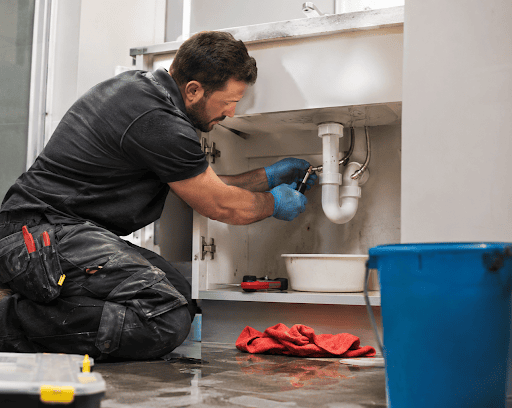
¿La póliza de responsabilidad civil de los plomeros cubre los daños causados por el agua?
El daño por agua es uno de los riesgos que enfrentan los plomeros cuando trabajan en las viviendas y propiedades comerciales de los clientes. Ya sea la instalación de un nuevo baño, la reparación de un tubo que se está estropeando o la sustitución de un sistema de calefacción, una fuga inesperada de agua puede causar daños más allá del trabajo original de la instalación de tuberías. Una conexión suelta, un tubo dañado o un problema de instalación podrían provocar:Seguir leyendo Más información
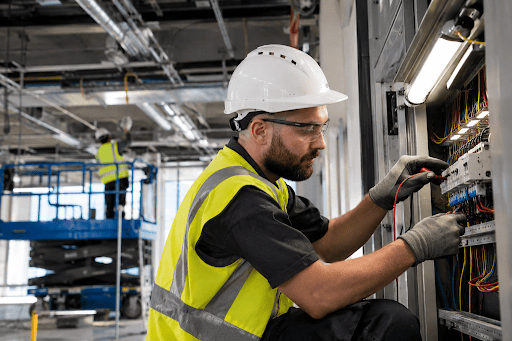
¿Qué seguros necesitan los contratistas de electricidad para proyectos comerciales?
Trabajar en proyectos eléctricos comerciales puede implicar responsabilidades diferentes a las de realizar instalaciones domésticas más pequeñas. Ya sea que estés instalando sistemas eléctricos en una oficina, manteniendo equipos en un almacén o trabajando como subcontratista en una obra, comprender los requisitos de tu seguro es una parte importante de la gestión de los riesgos empresariales. Los clientes comerciales y los principales contratistas puedenSeguir leyendo Más información

Solo trabajadores laborales vs subcontratistas legítimos
¿Cuál es la diferencia? ¿Por qué tantas personas están haciendo mal uso de esto? Así que veamos los dos conceptos: ¿Qué es un subcontratista auténtico? En pocas palabras, alguien a quien le pides que realice un trabajo para ti, pero no en relación con tu empresa. Un subcontratista auténtico: solo está afiliado a tu empresa a través de ti.Seguir leyendo Más información

¿La póliza de responsabilidad civil cubre los daños accidentales?
Si accidentalmente dañas la propiedad de otra persona mientras realizas tu trabajo, podrías preguntarte si tu seguro de responsabilidad civil podría cubrir el coste. La respuesta breve es que el seguro de responsabilidad civil puede cubrir ciertos tipos de daños accidentales a la propiedad de terceros, pero no cubre todos los accidentes ni todos los tipos de daños a los bienes.Seguir leyendo Más información

