Czy ubezpieczenie odpowiedzialności cywilnej pokrywa szkody spowodowane przez wypadek?
If you accidentally damage someone else’s property while carrying out your work, you may wonder whether your public liability insurance could cover the cost.
The short answer is that ubezpieczenie od odpowiedzialności cywilnej may cover certain types of accidental damage to third-party property, but it does not cover every accident or every type of property damage.
Whether a claim is covered will depend on the circumstances of the incident and the terms, conditions, limits and exclusions of your individual policy.
This article focuses on public liability insurance in the context of business insurance rather than personal or household policies.
Ubezpieczenie od odpowiedzialności cywilnej w życiu prywatnym
Public liability insurance is designed to protect businesses against certain claims made by members of the public and other third parties.
Depending on the policy and circumstances, it may provide cover where your business activities result in:
- Accidental injury to a third party
- Niestosowne uszkodzenie mienia osób trzecich
- Associated legal costs and expenses for an insured claim
For example, if a tradesperson accidentally damages a customer’s property while carrying out work, their public liability policy may respond, subject to the policy wording.
However, simply because damage was accidental does not automatically mean it will be covered.
Does Public Liability Insurance Cover Accidental Property Damage?
It may do, where the accidental damage is to property belonging to a third party and the incident falls within the scope of the policy.
Imagine you are carrying out work at a customer’s property and accidentally knock over and damage an item belonging to them. Depending on the circumstances and your policy terms, a resulting claim could potentially fall within your public liability cover.
Other examples could include accidentally:
- Damaging a customer’s flooring while moving equipment
- Breaking a customer’s window while carrying out work nearby
- Damaging a neighbouring property during business activities
- Causing damage to fixtures or belongings that are not part of the work you have been contracted to complete
These are examples only. Whether an insurer accepts a claim will depend on the facts of the incident and the wording of the relevant policy.
What Accidental Damage Might Not Be Covered?
One of the most important things to understand is that public liability insurance is not general accidental damage insurance for everything connected with your business.
There are several situations where cover may be restricted or excluded.
Damage to Your Own Property
Public liability insurance generally relates to claims involving third parties. It would not normally be intended to cover accidental damage to your own tools, equipment, stock, vehicles or business premises.
Separate insurance may be required for these risks.
Damage to the Property You Are Working On
This is particularly important for tradespeople.
Public liability policies may contain exclusions relating to the specific part of a property or item that you are directly working on.
For example, if you are working directly on a particular fitting and damage that fitting during the work, cover may be restricted or excluded.
However, if the same incident causes damage to other third-party property that you were not working on, that resulting damage may be treated differently.
The exact position will depend on the policy wording and circumstances.
Faulty Workmanship
Public liability insurance should not be assumed to provide a guarantee for the quality of your work.
The cost of correcting defective or faulty workmanship itself may not be covered. However, if faulty work subsequently causes separate accidental damage to third-party property, aspects of a resulting claim may potentially be covered, depending on the policy.
Deliberate Damage
Public liability insurance is intended for unforeseen incidents. Deliberate or intentional damage would not normally fall within the scope of accidental damage cover.
Contractual Liabilities
Some liabilities accepted solely because of a contract may fall outside the cover provided by a standard public liability policy.
Businesses should therefore check insurance requirements when entering into contracts, as some clients may also specify minimum cover levels.
An Example: A Plumber Accidentally Damages a Customer’s Property
Consider a plumber carrying out work in a customer’s home.
While moving equipment through the property, they accidentally damage the customer’s flooring.
Because the flooring belongs to the customer and is separate from the work being carried out, a resulting claim may potentially be considered under the plumber’s public liability insurance, subject to the policy terms and circumstances.
Now consider a different situation.
The plumber is working directly on a bathroom fitting and accidentally damages the fitting itself.
The position may be different because the damaged item was the property being directly worked on. An applicable policy exclusion could mean the cost of repairing or replacing that item is not covered.
If the incident also caused separate damage elsewhere in the property, that additional damage would need to be considered according to the policy wording.
This is why it is important to look at the circumstances of an incident rather than assuming all accidental damage is treated in the same way.
Who Could Need Public Liability Insurance?
Public liability insurance could be relevant to many businesses that interact with customers, members of the public or third-party property.
This may include:
- Plumbers
- Electricians
- Builders
- Decorators
- Carpenters and joiners
- Cleaners
- Gardeners and landscapers
- Beauty professionals
- Retailers
- Contractors
- Other small businesses and self-employed professionals
Public liability insurance is not generally a legal requirement for every UK business, although clients, contractors, landlords, trade bodies or other organisations may require businesses to hold a particular level of cover.
The appropriate insurance arrangements will depend on the nature of the business and the risks involved.
How Much Public Liability Cover Do I Need?
Public liability policies are available with different limits of indemnity.
The appropriate level will depend on factors such as the nature of your work, where you operate, the risks associated with your activities and any contractual requirements.
Some clients may specify minimum levels of public liability insurance within their contracts.
Rather than selecting a limit based solely on price, businesses should consider the potential risks associated with their activities and check any requirements that apply to their work.
How Much Does Public Liability Insurance Cost?
There is no single price for public liability insurance.
Insurers may consider a range of factors when determining the premium, including:
- The type of business and work undertaken
- Ročný obrat
- Liczba pracowników
- Wymagany poziom ochrony
- Historia poprzednich roszczeń
- Where and how the business operates
- The risks associated with the work
- Any additional covers required
Two businesses operating in the same industry may therefore receive different premiums depending on their individual circumstances.
What Should You Do If You Accidentally Damage Something?
If an accident occurs that could lead to a claim, you should follow the notification requirements set out in your policy.
This could include recording what happened, keeping relevant photographs or documentation and notifying your insurer or insurance intermediary promptly.
You should also be careful about admitting liability, agreeing to pay compensation or arranging repairs before speaking with the appropriate insurer or intermediary, as this could affect how a claim is handled.
Always follow the specific requirements contained within your policy documentation.
Jak SP Insurance Services może pomóc
Understanding whether accidental damage is covered is not always straightforward.
Different public liability policies can contain different terms, conditions and exclusions, so it is important to understand what a particular policy is designed to cover.
SP Insurance Services Limited acts as an insurance intermediary and can help businesses explore public liability insurance options based on their circumstances and requirements.
If you are unsure about the cover available for your business, speak to our team before arranging a policy.
Contact SP Insurance Services Limited to discuss your business insurance requirements.
Często zadawane pytania
Does public liability insurance cover damage to a customer’s property?
It may provide cover for accidental damage to third-party property where the incident falls within the scope of the policy. Cover will depend on the circumstances and the policy’s terms, conditions and exclusions.
Does public liability insurance cover accidental damage caused by employees?
A public liability policy may respond to certain insured incidents caused by employees while carrying out business activities. This will depend on the policy and circumstances.
Businesses with employees should also be aware that Employers’ Liability insurance is a separate type of cover. Subject to limited exemptions, UK employers are legally required under the Employers’ Liability (Compulsory Insurance) Act 1969 to hold at least £5 million of cover, although many insurers provide £10 million as standard.
Does public liability insurance cover faulty workmanship?
Public liability insurance should not be treated as a guarantee for the quality of your work. The cost of correcting faulty workmanship itself may be excluded. Separate resulting damage to third-party property may potentially be treated differently, depending on the policy wording and circumstances.
Does public liability insurance cover damage to my own tools?
Public liability insurance would not normally be intended to cover your own tools and equipment. Businesses may need separate cover for their own property.
Is accidental damage always covered by public liability insurance?
No. The fact that an incident was accidental does not automatically mean it is insured. The circumstances of the incident must fall within the scope of the policy and will be subject to its terms, conditions, limits and exclusions.
Zastrzeżenie: Informacje, przykłady i scenariusze przedstawione na tym blogu służą wyłącznie jako ogólne wskazówki i ilustracje. Nie stanowią one porady ani gwarancji pokrycia, korzyści lub wyników. Ochrona ubezpieczeniowa podlega konkretnym warunkom, wyłączeniom i ograniczeniom określonym w każdej indywidualnej polisie. Dostępność ochrony ubezpieczeniowej i wynik każdego roszczenia będą zależeć od faktów każdego przypadku, rodzaju posiadanej polisy i obowiązujących przepisów brytyjskich. Aby uzyskać informacje specyficzne dla Twojej sytuacji, zapoznaj się z dokumentami polisy lub porozmawiaj z doradcą ubezpieczeniowym.
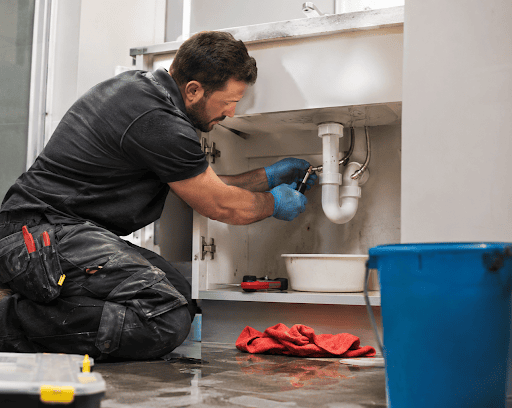
Czy ubezpieczenie odpowiedzialności cywilnej hydraulików obejmuje szkody wodne?
Uszkodzenia wodne są jednym z zagrożeń, z jakimi muszą się mierzyć hydraulicy podczas prac w domach klientów i obiektach komercyjnych. Niezależnie od tego, czy instalują nową łazienkę, naprawiają przeciekałą rurę czy wymieniają system grzewczy, niespodziewany wyciek wody może spowodować szkody wykraczające poza pierwotną pracę hydraulików. Niedociągnięcie połączenia, uszkodzona rura lub problem z instalacją mogą prowadzić do:Czytaj więcej Przeczytaj więcej o tym poście
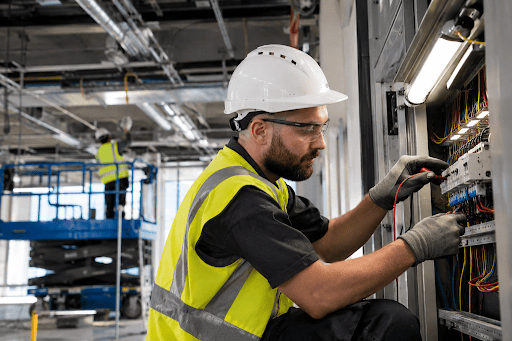
Jakie ubezpieczenie potrzebują wykonawcy elektrycznych instalacji w projektach komercyjnych?
Praca nad komercyjnymi projektami elektrycznymi może wiązać się z różnymi obowiązkami, różniącymi się od wykonywania mniejszych instalacji domowych. Niezależnie od tego, czy instalujesz systemy elektryczne w biurze, czy utrzymujesz sprzęt w magazynie, czy też pracujesz jako podwykonawca na placu budowy, zrozumienie wymogów ubezpieczenia jest ważną częścią zarządzania ryzykiem biznesowym. Klientami komercyjnymi oraz głównymi wykonawcami mogą być:Czytaj więcej Przeczytaj więcej o tym poście

Labour Only kontra Bona Fide Subcontractors
Jaka jest różnica? Dlaczego tak wiele osób myli się w tym aspekcie? Zbadajmy więc dwa aspekty: Co to jest bona fide subcontracting? Proste jest to osoba, której poprosisz o wykonanie pracy dla ciebie, ale nie w związku z działalnością Twojej firmy. Bona fide subcontractor: jest związany z Twoją firmą wyłącznie poprzez CiebieCzytaj więcej Przeczytaj więcej o tym poście

Jakie ubezpieczenie potrzebuję do pracy na budowie?
Jeśli pracujesz na budowach, możesz zostać poproszony o przedstawienie dokumentu potwierdzającego ubezpieczenie przed rozpoczęciem pracy. Ubezpieczenie, którego potrzebujesz, zależy od wielu czynników, w tym od tego, czy prowadzisz działalność gospodarczą na własny rachunek, zatrudniasz inne osoby, pracujesz jako podwykonawca lub główny wykonawca, rodzaju wykonywanej pracy oraz wymogów prawnych.Czytaj więcej Przeczytaj więcej o tym poście

